


15 Mar, 2026
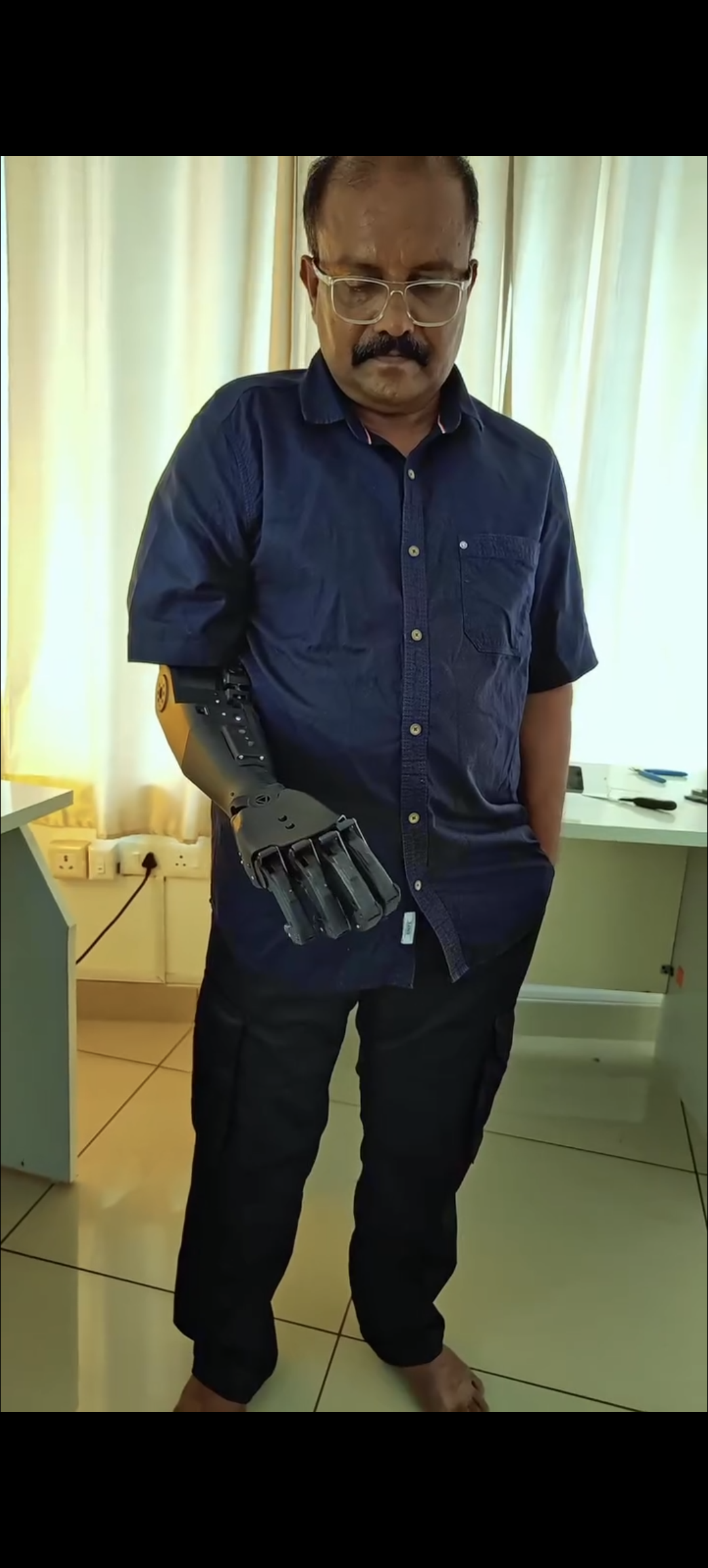
The demand for bionic hands in India is increasing as technology continues to transform the field of prosthetics. A bionic hand is an advanced prosthetic device designed to restore hand functionality for people who have lost a limb due to injury, illness, or congenital conditions.
Unlike traditional prosthetic devices, modern myoelectric bionic hands use muscle signals from the user’s residual limb to control finger movements. This allows users to perform everyday activities such as holding objects, gripping tools, and carrying out daily tasks with greater precision.
Innovators like Bendita Bionics are working to make advanced bionic hands in India more accessible and affordable, helping people regain independence and confidence.
A bionic hand, also called a myoelectric prosthetic hand, is a robotic prosthesis that replicates some functions of a natural human hand. It uses sensors to detect electrical signals generated by muscles in the forearm.
These signals are processed by a microcontroller that activates motors in the prosthetic hand, enabling the fingers to open, close, and perform different grip patterns.
This technology allows users to control the prosthetic hand more naturally compared to conventional prosthetic devices.
Modern bionic prosthetic hands combine several technologies to mimic natural movement.
Electrodes placed inside the prosthetic socket detect electrical signals from the user’s muscles.
These signals are interpreted by a processor inside the prosthetic system.
Small motors move the fingers to create different grip patterns.
Advanced bionic hands can perform various grips, such as:
Power grip
Precision grip
Pinch grip
Tripod grip
This makes everyday activities easier and more natural for the user.
A bionic hand prosthesis can help users perform many tasks that would otherwise be difficult.
Because the prosthetic responds to muscle signals, the movement feels more intuitive.
Modern prosthetic devices are designed to be comfortable and lightweight for long-term use.
Users can regain the ability to carry out daily activities such as eating, writing, and using tools.
The cost of a bionic hand in India can vary depending on several factors, including technology, number of motors, and customization.
Generally, advanced myoelectric prosthetic hands in India may range from several lakhs depending on the features and design.
Startups like Bendita Bionics are focused on developing affordable bionic hands in India, aiming to make advanced prosthetic technology accessible to a larger population.
A bionic prosthetic hand may be suitable for individuals with:
Transradial amputation (below elbow)
Partial hand amputation
Congenital limb differences
A prosthetist evaluates the residual limb and determines the most appropriate prosthetic solution.
The field of bionic prosthetics in India is rapidly evolving with innovations in robotics, sensors, and artificial intelligence. Future advancements may include:
Sensory feedback systems
Smarter control algorithms
Lighter materials and longer battery life
More natural finger movements
Companies such as Bendita Bionics are contributing to this transformation by developing advanced yet accessible bionic hand solutions designed for real-world use.
A bionic hand in India represents a powerful blend of robotics and medical technology. These devices help individuals regain functionality, independence, and confidence in their daily lives.
As innovation continues and accessibility improves, bionic prosthetic hands will play an increasingly important role in rehabilitation and assistive technology across India.
Click to Close