


05 Mar, 2026
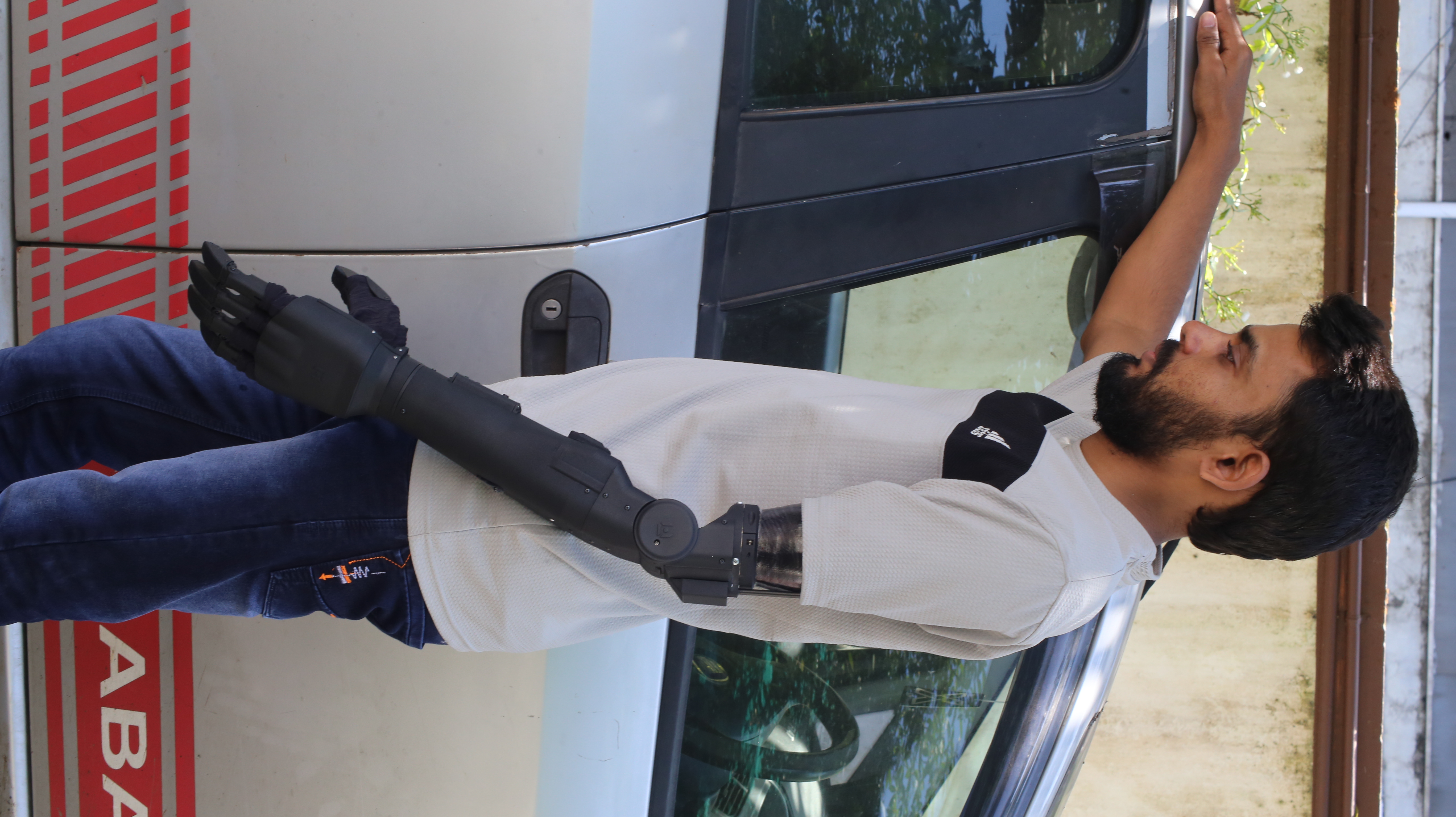
Modern bionic arms are no longer just mechanical replacements for lost limbs—they are intelligent systems that combine artificial intelligence (AI), advanced sensors, and precision engineering to restore natural movement and independence. Thanks to rapid innovation, today’s bionic arms can interpret human intent, adapt to user behavior, and perform complex tasks with remarkable accuracy.
This article explains how AI and sensors work together in modern bionic arms, and how innovators like Bendita Bionics
and Angel Hand are advancing this technology.
What Makes a Bionic Arm “Smart”?
A traditional prosthetic arm relies mainly on body movement or simple mechanical control. In contrast, a modern bionic armuses:
Together, these components allow the bionic arm to behave more like a natural limb—responding smoothly to the user’s intentions.
The Role of Sensors in Bionic Arms
1. Myoelectric Sensors: Reading Muscle Signals
At the core of most bionic arms are myoelectric sensors. These sensors are placed on the residual limb and detect electrical signals generated when muscles contract.
For example:
Thinking about closing your hand activates forearm muscles
Sensors pick up these signals
The system translates them into finger movement
The stronger or more specific the signal, the more precise the movement.
Both Angel Hand and Bendita Bionics rely on high-quality myoelectric sensing to ensure reliable and intuitive control for users.
2. Position and Force Sensors
In addition to muscle signals, modern bionic arms use:
Position sensors to track finger and joint movement
Force sensors to control grip strength
2. Adaptive Learning
Modern bionic arms use machine learning to adapt to:
Changes in muscle strength
Electrode placement shifts
User fatigue
This means the arm improves with use—becoming more personalized and easier to control.
Bendita Bionics, in particular, focuses on practical, user-centric control systems that adapt to real-world conditions rather than ideal lab settings.
3. Smooth and Natural Motion Control
AI helps coordinate:
Motor speed
Finger synchronization
Joint movement timing
Angel Hand is well known for its refined finger articulation and controlled motion, achieved through intelligent motor coordination and signal processing.
Bendita Bionics: Making Intelligent Bionics Accessible
Bendita Bionics is an Indian bionic arm startup focused on combining AI-driven control with lightweight, affordable design. Their approach emphasizes:
Real-world usability
Reduced device weight
Cost-effective advanced bionic solutions
Angel Hand: Precision Through Intelligent Design
Angel Hand has established itself as a reliable name in multi-articulated bionic hands. Its strength lies in:
Precise sensor integration
Consistent signal interpretation
Smooth and predictable finger movement
The Future of AI and Sensors in Bionic Arms
The next generation of bionic arms may include
Real-time AI adaptation
Sensory feedback that mimics touch and texture
Brain–computer interfaces (BCIs)
Cloud-assisted learning for continuous improvement
Companies like Bendita Bionics and Angel Hand are playing key roles in shaping this future by focusing on both innovation and user needs.
Conclusion
AI and sensors are the backbone of modern bionic arms, transforming them from passive devices into intelligent extensions of the human body. By interpreting muscle signals, learning user intent, and delivering smooth movement, these technologies restore not just function—but confidence and independence.
With innovators such as Bendita Bionics and Angel Hand, the future of bionic arms is becoming smarter, lighter, and more accessible than ever before.
Click to Close