


24 Jun, 2026
Losing a hand is a life-changing experience. Whether caused by an accident, a medical condition, or a congenital limb difference, the emotional and physical challenges can feel overwhelming. Simple daily tasks like eating, dressing, writing, driving, or shaking someone's hand suddenly require new ways of thinking and adapting.
The good news is that recovery doesn't end with surgery. Modern rehabilitation, combined with advances in bionic hands in India, is helping thousands of people regain their independence, confidence, and ability to live active lives.
In this guide, we'll explore the rehabilitation journey after amputation and how today's prosthetic hands in India are transforming lives.
Rehabilitation begins immediately after surgery. Its purpose is not just to heal the residual limb but to help individuals return to work, family life, education, and hobbies with confidence.
Recovery generally includes:
Every person's journey is unique, but with the right rehabilitation program and an advanced bionic hand in India, recovery becomes significantly smoother.
Many amputees experience a range of emotions, including grief, anxiety, frustration, and fear about the future.
Questions such as:
These feelings are completely natural.
Modern prosthetic technology has shifted the conversation from simply replacing a missing limb to restoring independence and confidence. Today's robotic prosthetic hands allow users to perform many everyday tasks with greater ease than ever before.
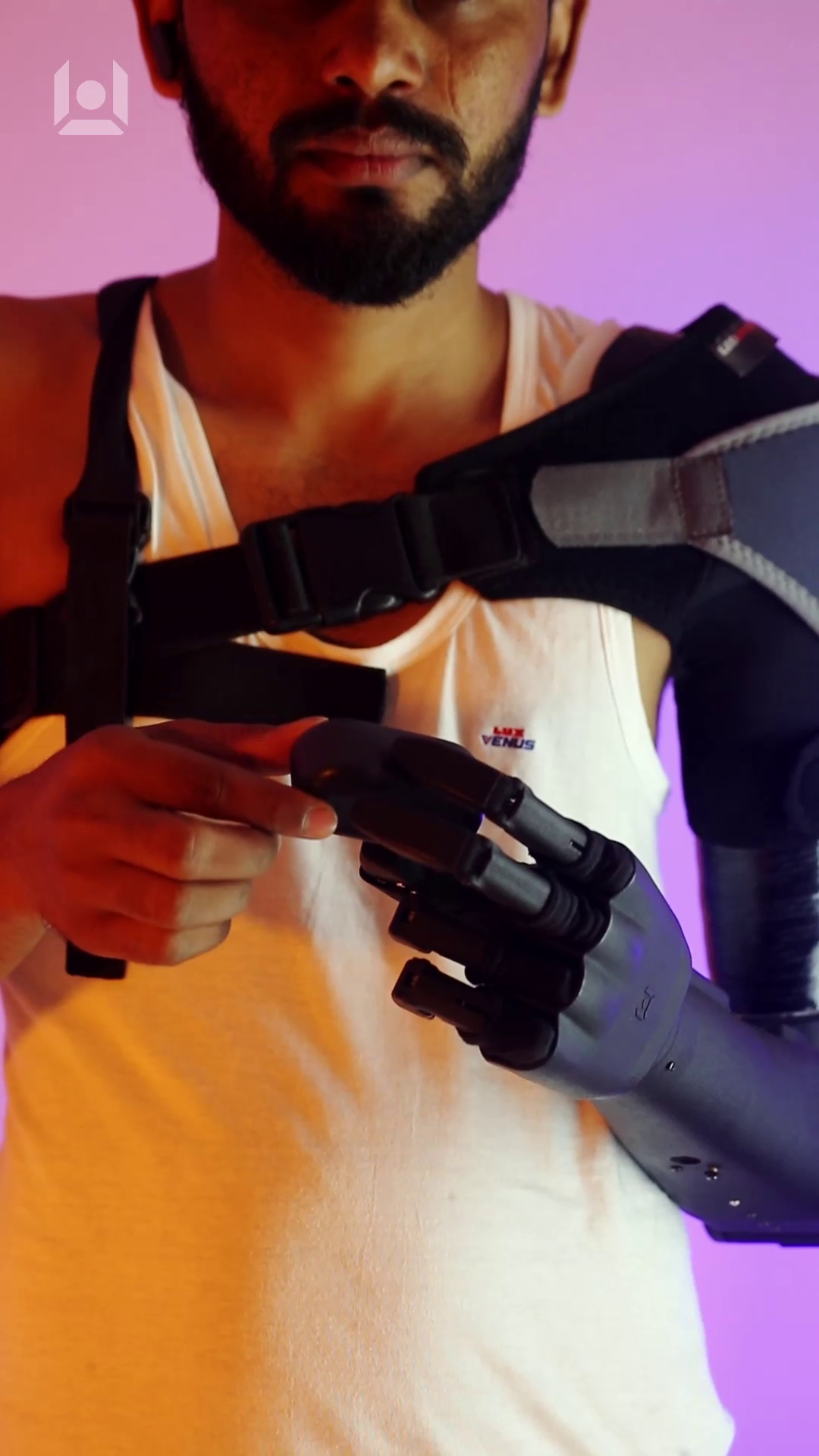
A bionic hand is an advanced prosthetic hand powered by small electric motors. Unlike traditional body-powered prostheses, bionic hands detect muscle signals from the residual limb and convert them into natural hand movements.
This technology allows users to:
Modern bionic hands in India are becoming more affordable, lightweight, and functional, making advanced prosthetic care accessible to a wider population.
Rehabilitation becomes much more effective when patients receive a prosthetic device designed for real-life activities.
One of the biggest milestones after amputation is regaining independence.
A quality prosthetic hand in India enables users to:
Every regained ability contributes to improved confidence and quality of life.
Using a myoelectric prosthetic hand requires muscle activation.
During rehabilitation, therapists teach users how to control these muscle signals effectively. Over time, this improves:
The more consistently the prosthesis is used, the more natural these movements become.
Many new amputees initially rely on family members for basic daily activities.
Advanced bionic hands in India enable users to perform many of these tasks independently, reducing caregiver burden while improving self-esteem.
Recovery is not only physical.
Research consistently shows that restoring function improves:
Many users report feeling "whole again" after successfully adapting to a modern prosthetic hand.
Occupational therapists often recommend exercises that help users adapt to their new prosthesis.
Common rehabilitation activities include:
As skills improve, users gradually progress to more complex activities like cooking, driving, gardening, and sports.
Selecting the right prosthesis is an important part of rehabilitation.
Some factors to consider include:
A well-fitted socket is essential for long-term use.
Lightweight prosthetic hands reduce fatigue during everyday activities.
Modern bionic hands offer multiple grip patterns for different tasks.
The device should withstand daily use and various environmental conditions.
Access to local prosthetic clinics and maintenance services is essential for long-term success.
India has made significant progress in prosthetic technology over the past decade.
Patients now have access to:
These developments have made bionic hands in India a practical option for many individuals seeking functional recovery after amputation.
Receiving a prosthetic hand is only one part of rehabilitation.
Occupational therapists help users learn how to integrate the prosthesis into daily life by practicing real-world activities such as:
Consistent practice helps transform these movements into natural habits.
Many individuals worry about returning to their careers after losing a hand.
prosthetic hand in IndiaWith proper rehabilitation and a modern, users work successfully in fields such as:
Advances in prosthetic technology are enabling people to remain productive and independent in a wide range of professions.
Recovery doesn't end when rehabilitation sessions finish.
Many bionic hand users go on to:
The goal of a bionic hand is not simply to replace a missing limb—it is to restore confidence, independence, and the freedom to live life without unnecessary limitations.
Recovering after amputation is a journey that requires patience, support, and determination. While rehabilitation takes time, today's bionic hands in India have transformed what is possible for people living with upper-limb loss.
By combining expert rehabilitation, occupational therapy, and advanced prosthetic technology, individuals can regain independence, return to work, reconnect with loved ones, and confidently participate in everyday life.
If you or a loved one is considering a prosthetic hand in India, consult an experienced prosthetist to explore the options best suited to your lifestyle, goals, and rehabilitation needs. With the right guidance and technology, life after amputation can be full, active, and empowering.
Click to Close