


05 Mar, 2026
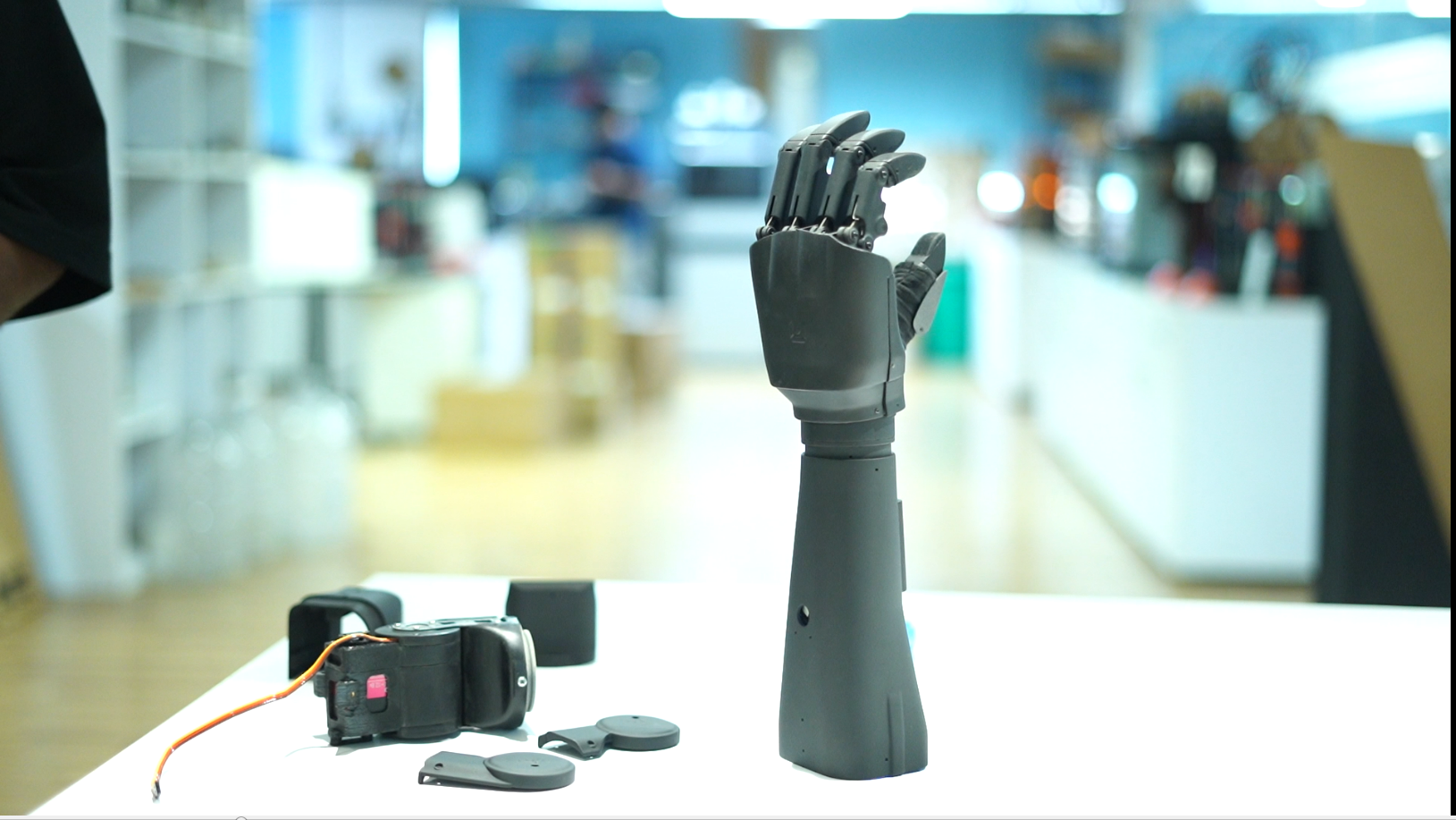
A bionic arm is not truly successful just because it moves—it succeeds when it feels like a natural extension of the body. For users, “natural” means intuitive control, smooth motion, comfort during long use, and confidence in everyday activities.
So what exactly makes a bionic arm feel natural? The answer lies in a combination of technology, biomechanics, design, and human-centered engineering. This article explores the key factors behind natural-feeling bionic arms and how innovators like Bendita Bionics and Angel Hand
are addressing them.
The most important factor in a natural-feeling bionic arm is how it is controlled.
Modern bionic arms use myoelectric control, where sensors detect electrical signals generated by muscle contractions. When users think about moving their hand, their muscles activate—and the bionic arm responds.
What makes this feel natural:
Minimal conscious effort
No complex switches or body movements
Direct link between intention and action
Both Bendita Bionics and Angel Hand rely on refined myoelectric sensing to ensure smooth and predictable control.
Natural arms don’t move in sharp or robotic steps. They move fluidly.
A bionic arm feels natural when:
Motors accelerate and decelerate smoothly
Fingers move in coordination, not isolation
Grips transition seamlessly
Advanced motion control algorithms help synchronize multiple motors, especially in multi-articulated bionic hands.
Angel Hand is known for its refined finger articulation, offering consistent and controlled movement that closely mimics natural hand behavior.
Even the most advanced bionic arm can feel unnatural if it is too heavy or poorly balanced.
Key factors include:
Overall device weight
Weight distribution close to the body
Reduced strain on the shoulder and residual limb
Bendita Bionics places strong emphasis on lightweight design, helping users wear their bionic arms comfortably for long hours without fatigue.
The socket—the part that connects the bionic arm to the body—is critical to natural use.
A natural-feeling bionic arm requires:
Even pressure distribution
Stable electrode contact
Minimal skin irritation
A poorly fitting socket can break the illusion of natural movement, no matter how advanced the electronics are.
Natural hands automatically adjust grip strength. A bionic arm must do the same.
Proportional control allows:
Gentle grip for fragile objects
Firm grip for heavy or slippery items
This is achieved by linking muscle signal intensity to motor output, making interactions feel intuitive rather than mechanical.
While most bionic arms do not yet provide true touch sensation, they still offer indirect feedback, such as:
Visual confirmation
Motor resistance
Subtle vibration cues
These cues help users “feel” the arm through experience and repetition.
Future developments aim to restore actual tactile feedback, further enhancing natural perception.
A bionic arm feels more natural the more it adapts to the user—and vice versa.
AI-assisted systems can:
Learn individual muscle patterns
Adjust to fatigue or electrode shifts
Improve accuracy over time
Bendita Bionics focuses on real-world adaptability, ensuring consistent performance outside controlled environments.
Daily tasks require different hand shapes.
Natural-feeling bionic arms offer:
Power grip for lifting
Pinch grip for precision
Tripod grip for writing and eating
Multi-articulated designs, such as those offered by Angel Hand, enable users to switch between these grips seamlessly.
Bendita Bionics is redefining natural-feeling bionic arms by focusing on:
Lightweight construction
User-centric myoelectric control
Practical functionality for Indian users
Affordable access to advanced technology
Their approach ensures that the arm integrates smoothly into the user’s daily routine—physically and emotionally.
Angel Hand emphasizes:
Stable and precise control
Smooth finger motion
Reliable performance throughout the day
This predictability plays a major role in making a bionic arm feel natural and trustworthy.
Beyond technology, a bionic arm feels natural when it restores:
Independence
Confidence
Social comfort
When users stop thinking about the device and start focusing on life, the bionic arm has truly succeeded.
A bionic arm feels natural when technology disappears into experience. Intuitive control, smooth motion, lightweight design, comfort, and adaptability all work together to make the device feel like part of the body.
With innovators like Bendita Bionics and Angel Hand pushing the boundaries of design and usability, bionic arms are becoming more human than ever before—not just in function, but in feel.
Click to Close